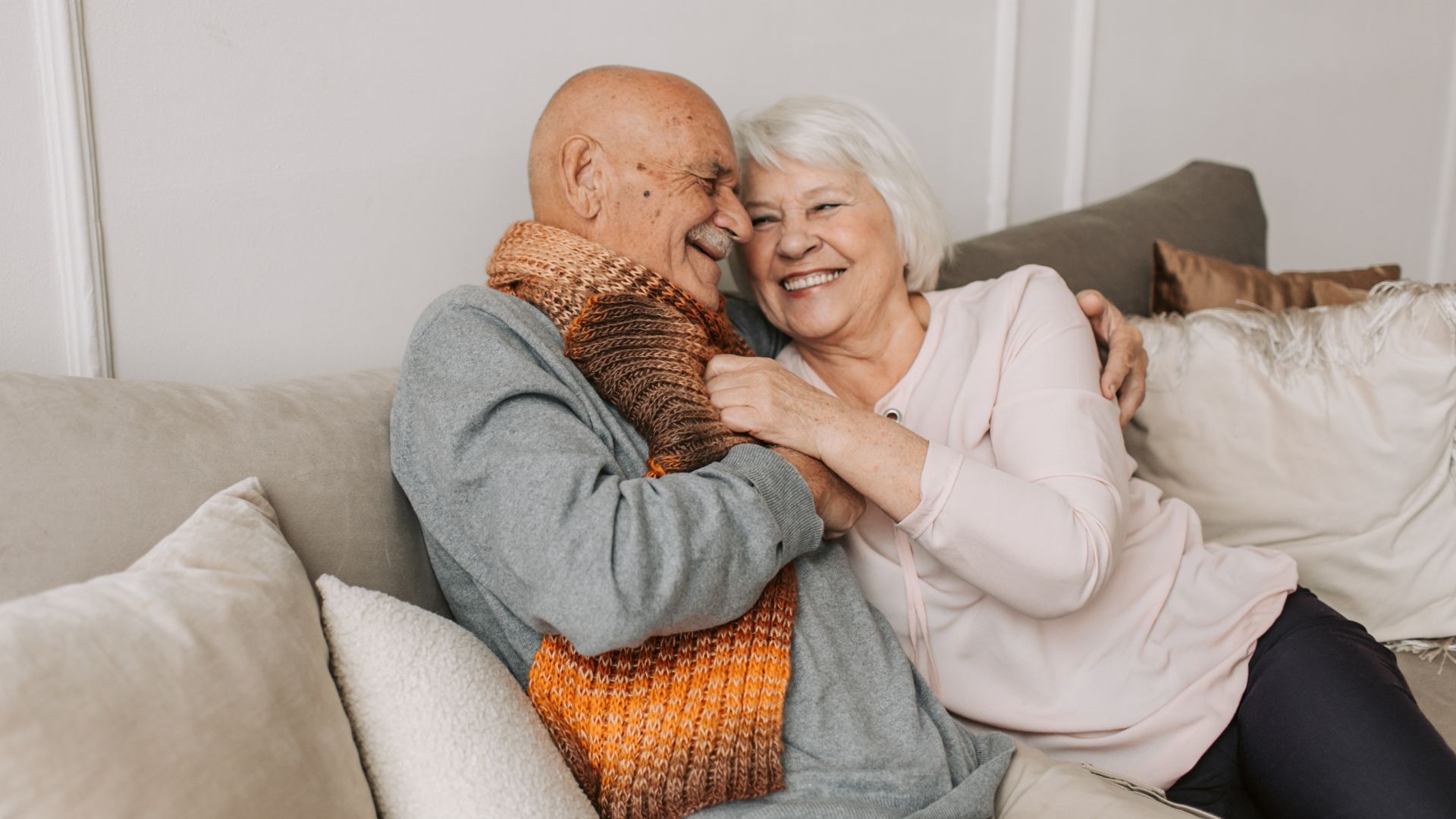
Love, Growth, and Repair After 70
Why couples therapy in later life is not “too late” work—but some of the most meaningful work we do
As a marriage therapist, I was shocked to hear a long-time colleague say that she no longer takes clients over the age of 70. She explained that around that age, people become rigid and are less likely to change. She said they have too many decades of “issues” and are hard to work with.
I admit that I had recently opted out of taking Medicare insurance. I felt conflicted about it, but ultimately decided that I couldn’t afford to work for the low fee Medicare would pay. It had not occurred to me, however, to cut off couples who called with 40-year marriages—couples who had grown apart, wanted more intimacy, needed better communication, or were grappling with changes in their health.
Personally, I love that older couples reach out and want to work on their “issues.” I’m sure some elderly couples are resigned to unhappiness and are simply waiting for one of them to die so the other will feel free. But what about the ones who pick up the phone and call for an appointment?
They are demonstrating a growth mindset—eager to bring healing and connection into their relationship.
Couples of all ages come to marital therapy for many reasons. They arrive feeling that the romance and intimacy have faded and want better ways to reconnect. They come because they have the same argument over and over. They feel lonely due to busy work lives or chronic phone scrolling. They are facing a decision and need guidance. They struggle with financial disagreements, differences in parenting or extended family relationships, or a desire for a better sexual connection. Mostly, they want better communication tools so they can feel seen, heard,
and valued.
Even at the age of 70, couples want all of that. But they may indeed be facing additional layers that younger couples are not yet confronting.
Changes in Physical and Mental Health
Health changes often enter the room with couples over 70. One partner may be dealing with chronic pain, a cardiac condition, cancer recovery, mobility limitations, or cognitive shifts. Medications can affect mood, energy, and sexual functioning. A couple who once moved through the world as equals may suddenly find themselves in a caregiver–patient dynamic, struggling to preserve dignity, mutuality, and romance in the face of very practical daily needs.
Retirement
For some couples, retirement feels like freedom. No longer responsible for work and family demands, they can join clubs, travel, and spend meaningful time together. For others, retirement means spending more time together than at any other point in their marriage. Frustrations that were once buffered by work schedules can rise to the surface, leading to conflict and bickering.
Love, Growth, and Repair After 70
Why couples therapy in later life is not “too late” work—but some of the most meaningful work we do
Partners who hid inside their jobs must now learn new coping skills and healthier ways to resolve conflict.
Loss
Most people in their seventies have experienced significant loss. They may have lost one or both parents, siblings, and close friends. Some have lost homes to fires or other disasters. Because partners often grieve differently—one wanting to talk while the other withdraws—disconnection can occur at precisely the moment they most need each other.
Recently, an older couple returned to therapy after a year away. I had first seen them when they lost the home they had lived in for decades to the Los Angeles fires. They were still displaced, still grieving the loss of not only a house but a lifetime of memories, when the wife received a cancer diagnosis.
Now they were facing layered stress: uncertainty about housing, ongoing health concerns, differing emotional coping styles, and a strong sense of obligation to their adult children. One partner wanted to talk and process; the other coped by staying busy and continuing to work. Both loved each other deeply, but their different ways of handling fear and grief left them feeling alone.
In our session, the work was not about solving the external problems. It was about helping them slow down, regulate their nervous systems, and speak from the vulnerable place beneath their coping strategies. When each was finally able to say, “I need you”, “I miss you,” and “I’m
scared”, the relational space between them softened. They reached for each other’s hands. In the midst of displacement, illness, and uncertainty, their connection became a source of stability rather than additional strain.
This is the kind of work that is possible in later life—not the removal of hardship, but the transformation of how partners face it together.
Sexuality
Sexuality is an area that deserves thoughtful reframing. Cultural myths suggest that desire and sensuality disappear with age, yet many older couples long for touch, closeness, and erotic connection. What changes is not the need for intimacy, but the way it is expressed. Therapy becomes a place to expand sexuality beyond performance and toward presence, tenderness, and embodied connection.
Family Dynamics
As we age, adult children, grandchildren, and in-laws may begin to weigh in on how we should live—where we should live, how we should spend money, and what activities we should pursue.
Love, Growth, and Repair After 70
Why couples therapy in later life is not “too late” work—but some of the most meaningful work we do
Couples are aware that there are more years behind them than ahead and want to plan intentionally. Therapy can help partners define how they want to spend the remaining years of their lives in meaningful and enjoyable ways. This is often the perfect time to resolve old conflicts, offer forgiveness, and create peace and companionship.
Long-standing patterns do, of course, exist. A pursuer–withdrawer dynamic that has been in place for forty years will not disappear overnight. But longevity also means these couples possess a shared history, resilience, and deep knowledge of one another’s inner worlds. When they engage in therapy, they are not starting from scratch—they are revising a very long story together.
Is it too late to change? Are there simply too many “issues”? Have we become too “rigid” in our thoughts and behaviors?
In my experience, it is not too late. Therapy with couples in their seventies can be some of the most moving and effective work we do. There is often a clarity of purpose, a willingness to be accountable, and a profound desire to be seen and appreciated by the person who has witnessed their entire adult life.
Rather than rigidity, I frequently encounter courage. Rather than resistance, I see urgency. Rather than it being “too late,” the work becomes deeply meaningful because time is precious.
So when my colleague told me she no longer sees couples over seventy because they are “too rigid” and have “too many decades of issues,” I felt both surprised and saddened—not only as a therapist, but as a seventy-year-old woman who is still growing, learning, loving, and changing.
If we, as clinicians, begin to believe that growth has an expiration date, we risk colluding with the very hopelessness our clients bring into the room.
The couples in their seventies who pick up the phone and call for an appointment are not demonstrating rigidity. They are demonstrating courage. They are saying, “We don’t want to live the rest of our lives in disconnection.” That is not pathology—that is motivation.
Yes, they bring long histories. But those histories are also rich with shared memories, resilience, inside jokes, hard-earned loyalty, and deep familiarity with one another’s wounds and longings.
When we help them slow down, regulate their nervous systems, and truly hear each other—sometimes for the first time in decades—the shifts can be profound and surprisingly rapid.
I have watched couples in their seventies learn to apologize in ways they never had before. I have seen partners soften long-held defenses, reach for each other’s hands, and rediscover tenderness after years of parallel lives. I have witnessed late-life sexual connection that is more
emotionally intimate than anything they experienced in their forties. I have seen forgiveness occur when both partners understand, perhaps for the first time, the loneliness the other has been carrying.
Love, Growth, and Repair After 70
Why couples therapy in later life is not “too late” work—but some of the most meaningful work we do
This is not “too late” work. This is essential work.
Development does not stop at midlife. The final decades of life invite us into tasks of integration, meaning-making, connection, and peace. Couples therapy can be one of the most powerful vehicles for that process. When partners feel seen, valued, and emotionally safe with each other, the benefits extend far beyond the relationship. They influence physical health, mental well-being, and the way individuals face aging itself.
As therapists, we are called to hold hope for our clients—sometimes before they can hold it for themselves. That hope should not diminish with a client’s age.
In fact, working with couples in their seventies has reminded me of something I believe more strongly each year:
As long as people are alive, they are capable of growth.
As long as partners are willing to reach for each other, repair is possible.
And as long as there is time—even a little time—there is time for love

 Deepen Emotional Intimacy