Couples Therapy FAQ: Everything You Were Afraid to Ask
Written by Mary Kay Cocharo, LMFT · California License #MFC 25394 · Licensed Marriage and Family Therapist with over 30 years of experience working with individuals, couples, and families in Los Angeles.

Most people spend weeks, sometimes months, thinking about couples therapy before they ever make a call. They have questions they feel embarrassed to ask. Many also worry about being judged. They wonder whether their situation is bad enough, too far gone, or too private to bring into a room with a stranger.
Still, those questions deserve honest answers.
After more than 30 years of sitting with couples, I have heard nearly every version of every concern. What follows is a straightforward guide to the things people most want to know but rarely feel comfortable asking out loud.
In This Article
The Practical Questions About Couples Therapy
How much does couples therapy cost?
In Los Angeles, couples therapy with a licensed, experienced therapist typically ranges from $200 to $350 per 50-minute session. In addition, my sessions are 90 minutes, which allows for the kind of depth that shorter sessions rarely reach. Longer sessions cost more upfront but tend to move faster, meaning couples often need fewer total sessions to reach their goals.
Private Couples Intensives, which are full-day or two-day concentrated formats, represent a higher single investment but can accomplish in one or two days what might otherwise take months of weekly sessions. For couples in crisis or with limited time, the math often works in favor of the intensive.
Most couples therapy is not covered by insurance because it is not billed as a mental health diagnosis for an individual. Some plans offer partial reimbursement through out-of-network benefits. For this reason, I recommend calling your insurance provider directly to ask about out-of-network mental health coverage.
How long does couples therapy take?
There is no honest universal answer, but here is a realistic range based on clinical experience:
| Situation | Typical Timeline |
|---|---|
| Good relationship, wanting to deepen connection | 3 to 6 months |
| Recurring conflict patterns, communication breakdown | 6 to 12 months |
| Significant breach of trust or affair recovery | 12 to 24 months |
| Crisis intervention or acute distress | 1 to 3 intensive sessions, then ongoing support |
| Pre-marital preparation | 4 sessions over 6 to 8 weeks |
Progress also depends on how consistently both partners engage between sessions. Above all, therapy is not something that happens to you for an hour a week. The couples who move fastest are the ones who take what they practice in session and keep trying it at home, even imperfectly.
Do you offer online or in-person sessions?
I offer both. Many couples appreciate the flexibility of telehealth, especially those with demanding schedules or who live outside the immediate Los Angeles area. In-person sessions at my West Los Angeles office allow for a level of presence and attunement that some couples find valuable, particularly early in the process. A free 15-minute consultation is a good way to discuss which format suits your situation.
The Awkward Couples Therapy Questions
What if my partner refuses to come?
This is one of the most common things I hear, and it does not have to be a dead end.
Individual therapy can be a meaningful starting point. Working on your own patterns, communication style, and emotional responses changes the dynamic of the relationship whether or not your partner is in the room. Sometimes one partner’s growth in individual therapy creates enough shifts that the other becomes willing to engage.
It helps to understand why a partner is refusing. The reasons are rarely indifference, and each one calls for a different response.
Common reasons a partner declines include:
- Fear of being blamed or ganged up on by the therapist
- Skepticism that therapy works
- Pride or stigma around asking for help
- A belief that problems should stay private
- Past negative experiences with therapy
A partner who fears being blamed may be reassured to know that good couples therapy is not about assigning fault. A partner who is skeptical might be willing to commit to just three sessions as a trial. A consultation call where your partner can ask questions directly, without any pressure to commit, is often the lowest-barrier first step.
Will the therapist take sides?
No. A skilled couples therapist is not a judge and does not function as one. In other words, my job is not to decide who is right. It is to help both of you understand what is happening between you and to create the conditions for something different to become possible.
That said, there are moments in therapy when I will reflect something difficult back to one partner or gently challenge a pattern that is causing harm. That is not taking sides. It is doing the work. Both partners should expect to be challenged at some point, and both should expect to feel genuinely understood.
Can a therapist tell my partner what I said in an individual session?
This is an important question that every couple deserves a clear answer to before they begin. My policy is full transparency: I do not hold secrets from one partner that affect the other. If I meet with each partner individually, as some therapists do in an initial assessment, anything that comes up in those sessions is considered part of the couple’s work.
Key Insight
I am not a safe place to deposit confessions that you do not want your partner to know. This is not because I do not care about individual privacy. It is because couples therapy cannot function on a foundation of concealed information.
If you need a confidential space for something you are not ready to share with your partner, individual therapy is the appropriate setting for that.
The Questions People Feel Embarrassed to Ask
Is our situation bad enough to warrant therapy?
Yes. Almost certainly yes, whatever your situation is.
Couples therapy is not only for relationships in crisis. Some of the most productive therapy I have done has been with couples who have good relationships and simply want more depth, more joy, or better tools before they hit a wall. Waiting until things are broken is like waiting until your car breaks down to get an oil change. In fact, the earlier you address patterns, the less entrenched they become.
If you are asking whether your situation warrants therapy, that question itself is the answer.
What if we talk about things that make the relationship worse?
This is a real and legitimate concern, and I want to take it seriously rather than dismiss it.
Couples therapy does sometimes surface painful things. Old wounds get named. Patterns that have been quietly operating for years get identified. That process can feel uncomfortable, and there is a period in some therapeutic work where things feel harder before they feel better. This is normal, and it is very different from making things worse.
What I work to ensure is that nothing is surfaced without the support needed to hold it. The goal is never excavation for its own sake. It is always movement toward greater honesty, safety, and connection. You can read more about the kind of work I do in couples therapy sessions on my website.
What if one of us wants to end the relationship and the other does not?
Couples therapy is not exclusively for couples trying to stay together. Sometimes the most important work a couple can do is figure out honestly what they both want, including whether continuing the relationship is right for either of them.
I offer a service specifically for this: Saying Goodbye, which supports couples who have decided to separate in doing so with as much dignity, clarity, and care as possible, especially when children are involved. A conscious ending, handled with therapeutic support, can prevent years of ongoing harm.
Do therapists judge the things couples share?
No. After more than three decades in this work, there is very little I have not heard. Affairs, addiction, sexual disconnection, financial betrayal, years of contempt, longstanding lies, complicated family dynamics. Even so, none of it changes the fundamental way I see the people sitting across from me.
What I see, consistently, are two people who are hurting and who, in most cases, genuinely want things to be different. That is what I work with.
The Questions About Whether Couples Therapy Will Work
How do we know if couples therapy is working?
Of course, progress in couples therapy does not always look like fewer arguments. Sometimes it looks like arguments that end differently, with repair rather than prolonged silence. It looks like one partner taking a risk they would not have taken before, or the other responding with more patience than they used to have. It looks like a topic that was previously untouchable getting raised and survived.
Some markers worth noticing over time:
- You feel more understood by your partner, even when you disagree
- Conflicts resolve faster or with less lasting damage
- You are more willing to be vulnerable with each other
- You have language for what is happening between you that you did not have before
- You find yourselves looking forward to spending time together again
What if we try couples therapy and it does not help?
It is a fair question. Not every therapeutic relationship is the right fit, and not every approach works for every couple. If you complete a reasonable course of therapy and feel it has not moved things, it is worth exploring whether a different modality, a different therapist, or a different format like an intensive might be more effective.
What I would caution against is using the possibility of failure as a reason not to try. The cost of not addressing what is happening in your relationship is almost always higher than the cost of attempting to address it, even imperfectly.
If you have questions that did not make it onto this list, I welcome them.
Still Have a Question You Have Not Asked?
A free 15-minute consultation is a no-pressure space to ask anything you have been wondering about before deciding whether to take the next step.
About the Author
Mary Kay Cocharo, LMFT
California License #MFC 25394
Mary Kay Cocharo is a Licensed Marriage and Family Therapist with over 30 years of clinical experience working with individuals, couples, and families in Los Angeles. She holds advanced certifications in Imago Relationship Therapy and Encounter-Centered Couples Transformation, and has been named one of the Three Best Rated Therapists in Los Angeles for multiple consecutive years.
11500 West Olympic Boulevard, Suite 614, Los Angeles, CA 90064 · 310-828-2624
Frequently Asked Questions
Does couples therapy work?
Research consistently supports the effectiveness of couples therapy. A widely cited meta-analysis published in the Journal of Marital and Family Therapy found that approximately 70 percent of couples who complete therapy show significant improvement. Emotionally Focused Therapy and Imago Relationship Therapy both have strong evidence bases. Success depends heavily on both partners’ willingness to engage honestly and do the work between sessions.
Is couples therapy the same as marriage counseling?
The terms are often used interchangeably. Technically, marriage counseling tends to refer to shorter-term, problem-focused work, while couples therapy implies a deeper exploration of relational patterns, attachment, and emotional dynamics. The distinction matters less than the qualifications and approach of the therapist you choose. Look for a licensed Marriage and Family Therapist (LMFT) or a licensed psychologist or clinical social worker with specific training in couples work.
How do I find a good couples therapist?
Look for a therapist who is licensed, has specific training in couples modalities (not just individual therapy applied to couples), and who offers a consultation before committing. Advanced certifications in approaches like Imago Relationship Therapy, Emotionally Focused Therapy, or the Gottman Method are meaningful indicators of specialized expertise. Reading their published writing, if available, gives you a strong sense of their clinical perspective before you ever make contact.
Can we do couples therapy if we are not married?
Absolutely. Couples therapy is appropriate for any two people in a committed relationship, regardless of marital status. Dating couples, engaged couples, long-term partners, and couples navigating separation all benefit from skilled relational support. In short, the work is about the dynamic between two people, not a legal status.
What should we talk about in the first session?
Most therapists will guide the first session. You do not need to prepare a presentation. Come willing to describe, in general terms, what has been happening and what you are hoping for. It is also useful to notice, separately, what you most want the other person to understand. The first session is as much about establishing safety and rapport as it is about gathering information.
This article is written by a licensed clinician for educational purposes only. It does not constitute clinical advice, diagnosis, or treatment, and does not establish a therapeutic relationship.
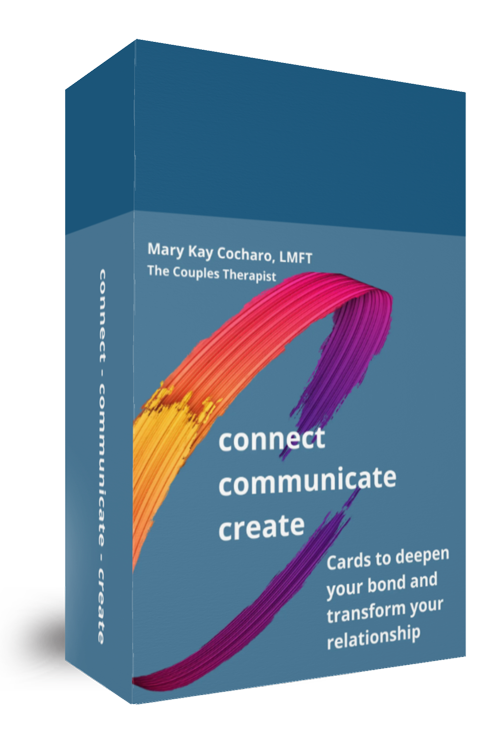
 Deepen Emotional Intimacy